Who is liable when a neighbour's leak damages your unit
By Janice · Updated 2026-08-11
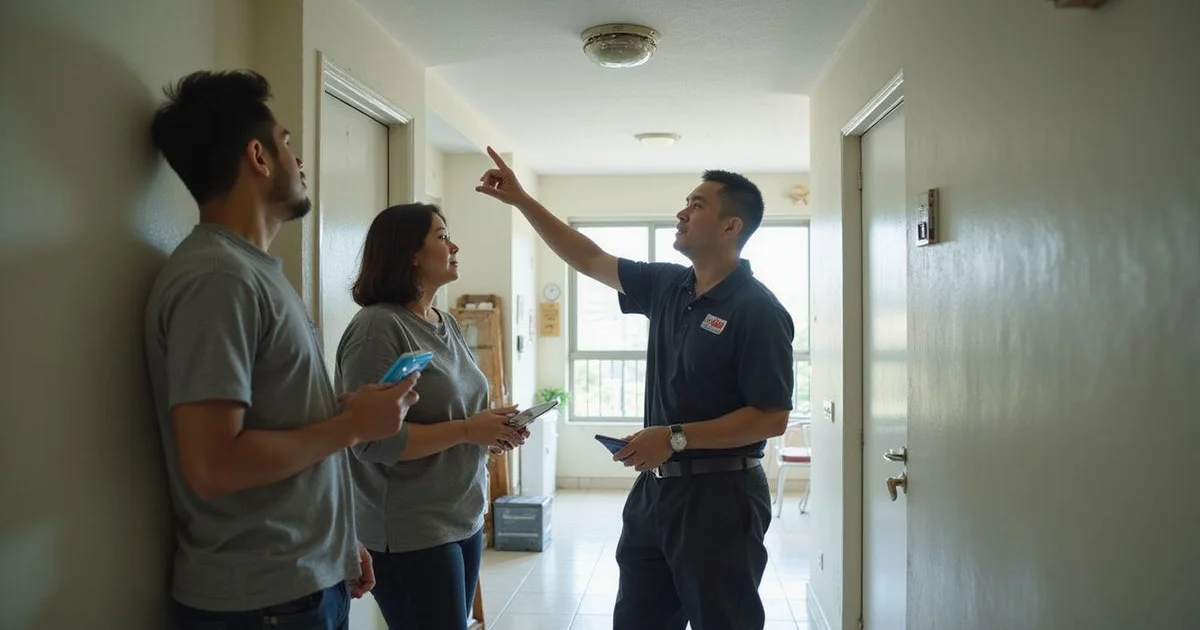
This is general information about common practice in Malaysian strata living, not legal advice. Liability for leak damage depends on the specific facts and your building’s rules, so consult a qualified professional if a dispute does not resolve easily.
A stained ceiling or a damp wall in a condo is rarely just a plumbing problem. It usually raises an uncomfortable question about who is responsible for fixing not just the leak, but the damage it caused, and that answer depends on where the water actually came from.
Start with where the water is coming from
The single most useful step is identifying the source, not just where the damage appears. Water travels, so a stain on your ceiling might trace back to a leak several metres away, in a different part of the unit above, or even from shared infrastructure rather than your direct neighbour at all. A plumber’s assessment of the actual source is the foundation for everything that follows, since responsibility generally tracks the cause of the leak, not the location of the visible damage.
The general pattern
- Leak from a neighbour’s unit, caused by something within their control (a failed appliance hose, an unmaintained fitting, unauthorised work): responsibility for the damage to your unit typically falls on that neighbour, though the exact process for recovering costs varies.
- Leak from shared infrastructure (a common riser, stack, or pipe serving multiple units): typically the responsibility of the building management or joint management body to repair and address.
- Leak from normal wear in an old building with no clear negligence: this is often the greyest area, and how it is handled depends heavily on the building’s own rules and any applicable insurance.

A practical comparison
| Leak source | Who typically handles it |
|---|---|
| Neighbour’s appliance or fitting failure | The neighbour, often via their insurance |
| Neighbour’s unauthorised renovation work | The neighbour or their contractor |
| Shared riser or stack | Building management or JMC |
| Unclear source, older building, no negligence | Case by case, often involves both parties |
This table is a general starting point, not a fixed outcome. The specific facts, and sometimes the building’s own by-laws, shape how a given case is actually resolved.
Steps to take
- Document everything immediately. Photos with dates, and a written note of when you first noticed the damage.
- Inform your neighbour and building management in writing, not just verbally, so there is a record of when the issue was raised.
- Get a plumber’s assessment of the source, ideally one both parties can agree is independent, especially if there is any disagreement about the cause.
- Check your own home insurance policy, since some policies cover the damage to your unit regardless of fault and let the insurer pursue recovery separately.
- Escalate to the management body if the two parties cannot agree, since most joint management committees have a process for handling exactly this kind of dispute.
If you are renting rather than owning, the question of who pays shifts slightly: the guide to landlord and tenant plumbing responsibility covers who typically covers a repair when the leak is on your side of the wall.
Why documentation matters more than anything else
Most disputes over neighbour leak damage are not really arguments about the plumbing, they are arguments about what happened and when, made harder by the fact that nobody wrote anything down early. A clear written record from the first sign of damage, combined with an independent plumber’s assessment of the source, resolves the majority of these situations without it turning into a prolonged dispute.
If you need an independent assessment of a leak’s source, browse plumbers in Klang Valley and compare providers using this directory’s published ranking method before choosing one for a dispute-sensitive job.
Leak damage disputes between neighbours are common in multi-storey living, but they are also usually resolvable once the source is clearly identified and both sides have it in writing. Acting early and documenting everything is the single best thing you can do, regardless of which side of the leak you are on.
Questions people ask
- My ceiling has a water stain from the unit above. What should I do first?
- Document the damage with photos and a date, then inform your neighbour and the building management in writing as soon as possible. Getting a plumber to identify the source of the leak is the next step, since liability generally follows the cause, not just where the damage shows up.
- What if the leak is coming from a shared pipe, not my neighbour's unit?
- If the leak originates from shared infrastructure, such as a common riser or stack, it is typically the management body's responsibility to repair, rather than any individual unit owner's.
- Can I make my neighbour pay for the repair to my unit?
- If a plumber's assessment confirms the leak originated from your neighbour's unit due to something within their control, such as a burst washing machine hose or an unmaintained fitting, they are often expected to cover the resulting damage. This is usually resolved between the parties or through the management body, and can involve insurance on either side.
- Does building insurance usually cover this kind of damage?
- It depends on the specific policy and whose insurance is involved. Some policies cover damage to your own unit regardless of cause, while others exclude damage caused by a neighbour's negligence and expect that to be recovered from the responsible party directly.